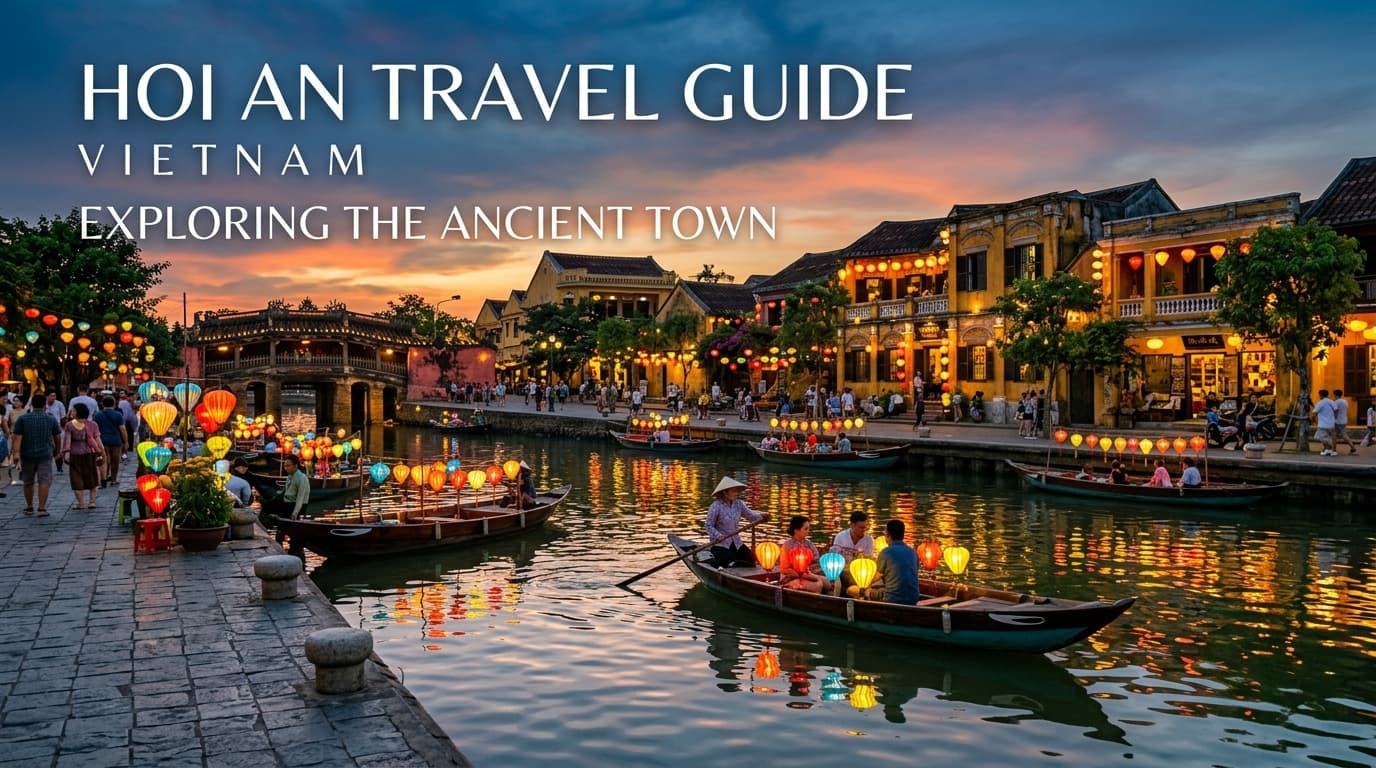
Imagine stepping into a living museum where lantern-lit streets glow amber at dusk, tailors beckon from every corner, and the smell of grilled fish drifts from riverside restaurants. Hoi An is Vietnam's best-preserved ancient town—a UNESCO World Heritage site frozen in time, where 15th-century architecture meets modern beach culture just 30 kilometers away. Whether you're hunting for custom-made clothes, exploring centuries-old temples, or lounging on pristine sand, this Central Vietnam gem delivers an experience unlike anywhere else in the country.
Key Takeaways
| Question | Answer |
|---|---|
| What is the best time to visit? | October to April (dry season, 20-28°C). Avoid May-September monsoon. |
| How much does it cost? | Budget: 300,000-500,000 VND/day; Mid-range: 700,000-1.2M VND/day; Splurge: 1.5M+ VND/day |
| How do I get there? | Fly to Da Nang (30km away), then bus/taxi to Hoi An (~1 hour). Direct flights from Hanoi, Ho Chi Minh City. |
| Is it safe? | Very safe. Low crime, tourist-friendly, excellent infrastructure. Standard precautions apply. |
| What should I book in advance? | Tailor fittings (2-3 days for quality work), hotels during Oct-Dec peak season, cooking classes. |
| What's the main draw? | Ancient town atmosphere, custom tailoring, nearby beaches, local cuisine, lantern festivals. |
| How long should I stay? | 2-3 days minimum; 4-5 days ideal to include beach time and day trips. |
1. Getting to Hoi An: Transport & Logistics
Hoi An sits in Quang Nam Province, about 30 kilometers south of Da Nang, Vietnam's third-largest city and the closest major transport hub. Most visitors fly into Da Nang International Airport, which receives direct flights from Hanoi, Ho Chi Minh City, and several international destinations. From Da Nang, reaching Hoi An takes just 45 minutes to 1 hour depending on traffic and your transport choice.
When we visited during peak season, the drive from Da Nang airport felt seamless—the highway is well-maintained and clearly signposted. The journey winds through rice paddies and past local villages, giving you a first taste of rural Central Vietnam before arriving in the ancient town.
Getting from Da Nang Airport to Hoi An
Grab (ride-hailing app) is the most convenient option—expect to pay 150,000-200,000 VND (USD 6-8) for a standard car. Download the app before you arrive, and drivers are familiar with the route. Shared minibuses run regularly and cost around 50,000-80,000 VND (USD 2-3) per person, though they may make multiple stops. Taxis from the airport meter start at 15,000 VND, then add distance charges—budget 200,000-250,000 VND total. Many hotels offer airport pickup for 300,000-500,000 VND if booked in advance.
Search and compare flights to Hanoi, Ho Chi Minh City, Da Nang and Phu Quoc at the best prices.
Search Flights on Trip.com →Getting Around Hoi An Town
The ancient town itself is best explored on foot—it's compact, pedestrian-friendly, and designed for wandering. Bicycles are available for rent at most hotels (30,000-50,000 VND per day) and are perfect for reaching nearby villages and beaches. Motorbike rentals cost 100,000-150,000 VND daily if you're comfortable riding; many tourists use them for day trips to Cham Islands or An Bang Beach. Grab and local taxis work well for longer distances or late-night returns.
Book buses, trains, ferries, and transfers between Vietnamese cities easily online. Compare routes and prices.
Book Transport on 12Go → Scan me
2. Best Time to Visit: Seasons & Weather
October through April is peak season in Hoi An—the dry months when temperatures hover between 20-28°C (68-82°F), humidity drops, and rainfall is minimal. This is when the ancient town truly shines: lantern festivals run more frequently, outdoor activities are comfortable, and the beaches are calm. During our team's November visit, we experienced perfect weather for exploring the old town and swimming at nearby beaches without the oppressive heat of summer.
May through September brings the southwest monsoon, with heavy afternoon rains, high humidity (80%+), and temperatures exceeding 35°C (95°F). Tourist numbers plummet, and some beach activities become unsafe due to rough seas. However, prices drop significantly, and the town feels less crowded—a trade-off some travelers prefer. The Hoi An Lantern Festival traditionally occurs on the 14th day of each lunar month, drawing crowds but creating magical evening atmospheres with thousands of silk lanterns floating on the Thu Bon River.
Did You Know? Hoi An was designated a UNESCO World Heritage Site in 1999 for its well-preserved Southeast Asian trading port dating from the 15th-19th centuries.
Source: UNESCO World Heritage Centre
3. Neighborhoods & Areas: Where to Explore
The Ancient Town (Old Quarter) is the heart of Hoi An—a 2km² area of narrow streets lined with yellow-washed shop-houses, temples, and family-run businesses. Tran Phu Street runs parallel to the Thu Bon River and contains the most iconic architecture; Japanese Bridge (Cau Nhat Ban) sits at its western end. This is where you'll find tailor shops, souvenir vendors, and restaurants. During our explorations, we discovered that wandering the side streets—Nguyen Duy Hieu, Le Loi, Hoang Van Thu—revealed quieter temples, local cafes, and authentic family workshops away from the main tourist drag.
An Bang Beach, 5km northeast, offers golden sand and calm waters perfect for swimming and sunset drinks. It's developed significantly in recent years with beachfront restaurants and hotels, yet remains more relaxed than crowded resort areas. Cua Dai Beach, 4km east, is longer and less crowded, popular with locals and families. Both beaches are easily reached by bicycle or motorbike in 15-20 minutes.
Cam Thanh Village, 10km north, is famous for basket boat tours through mangrove forests—a unique experience where locals row traditional coracle boats through waterways. Tra Que Vegetable Village, 3km north, offers organic farming and cooking classes where you harvest vegetables and prepare traditional meals.
The Ancient Town Layout
Compare hotels, resorts, and guesthouses across Vietnam with free cancellation on most bookings.
Search Hotels on Booking.com → Scan me
The old quarter is roughly rectangular, bounded by the river to the south and east. The Japanese Bridge area (western end) is most touristy; the Quan Cong Temple area (central) feels more local; and the northern streets near the market are where residents actually live and work. Budget 2-3 hours for a thorough walk, or 5-6 hours if you're stopping at every temple and shop.
Beach Villages & Outlying Areas
Hoi An Town proper is about 2km from the coast, which keeps the ancient architecture protected from salt spray and tourism overdevelopment. The beaches feel like separate destinations—you can spend a morning in temples and an afternoon swimming. This separation is actually ideal: you get authentic cultural immersion without beach-resort chaos.
4. Top Sights & Attractions
Japanese Bridge (Cau Nhat Ban)
This iconic 18th-century covered bridge connects the old town's main streets and is Hoi An's most photographed landmark. The bridge was built by Japanese merchants and later maintained by Chinese residents—a symbol of the town's multicultural trading heritage. Entry is free, and the best photos come at sunrise or during the lantern festival when the bridge glows amber. In our experience, arriving before 8 AM beats the crowds of tour groups that descend by mid-morning.
Ancient House Museum & Family Workshops
Several restored merchant houses operate as museums, preserving the lifestyle of wealthy traders from centuries past. Tan Ky House (87 Tran Phu St) is the most famous—a 200-year-old family home with original furniture, architecture, and a working silk shop downstairs. Entry is around 40,000 VND. What impressed us most was seeing how families lived and worked in the same space, with goods displayed on the ground floor and living quarters above. Other notable houses include Phun Hung House and Quan Thang House, each with slightly different architectural styles reflecting their era.
Temples & Assembly Halls
Quan Cong Temple honors a Chinese general and features intricate wooden carvings and red silk lanterns. Phuc Kien Assembly Hall (built 1697) is dedicated to the goddess Thien Hau and showcases ornate Chinese architecture with a peaceful courtyard. Cantonese Assembly Hall is another gem with detailed woodwork. Most temples charge 20,000-30,000 VND entry and are open 8 AM-5 PM daily. The quiet mornings (before 9 AM) offer a more meditative experience.
Skip the hassle — book Vietnam day trips, cooking classes, and experiences in advance with instant confirmation.
Browse Activities on Klook → Scan me
Central Market (Cho Hoi An)
The bustling wet market near the river is where locals shop for produce, fish, and meat. It's chaotic, colorful, and utterly authentic—far removed from the tourist-focused old town. Arrive early (6-7 AM) to see the best activity. You'll find fresh herbs, tropical fruits, and prepared foods at unbeatable prices. This is where we grabbed fresh banh mi for 15,000 VND and watched vendors expertly fillet fish.
5. The Tailor Experience: Custom Clothes in Hoi An
Hoi An's tailor shops are legendary—the town has earned a reputation as Southeast Asia's custom-clothing capital, with hundreds of tailors offering suits, dresses, and traditional áo dài in 2-5 days at a fraction of Western prices. A custom suit typically costs 1.5-3 million VND (USD 60-120); a dress runs 800,000-1.5M VND (USD 32-60). Quality varies wildly, so choosing the right tailor matters.
Finding a Quality Tailor
Walk Tran Phu Street and you'll see tailor shops every 10 meters—the sheer competition is both a blessing and a curse. Tourist-oriented tailors near the bridge often rush work and cut corners; local tailors tucked on side streets tend to be more meticulous. Ask your hotel for recommendations—they know which tailors deliver quality. Expect to visit twice: once for measurements and fabric selection, again for fitting and adjustments. Reputable tailors will measure you carefully (taking 20+ measurements), show you fabric samples, and discuss design details. Red flags include tailors who rush you through measurements or promise unrealistic turnaround times.
Tailor Shop Tips
- Budget time wisely: Allow at least 3-4 days for quality work. Anything faster risks poor finishing.
- Bring reference photos: Show tailors exactly what you want—a picture of a suit style, dress design, or traditional áo dài.
- Inspect the fabric: Feel the weight and weave. Ask about thread count and origin.
- Request a fitting: A proper tailor will schedule a fitting 1-2 days before completion to adjust length, fit, and seams.
- Get a receipt: Document what you ordered, fabric details, price, and completion date.
When we had a dress tailored during our stay, the tailor spent 45 minutes on measurements alone, discussed fabric weight and drape, and scheduled two fittings. The final result was impeccable. We've also heard horror stories from travelers who chose the cheapest option and received poorly finished garments—the adage "you get what you pay for" definitely applies here.
6. Where to Eat: Local Food & Restaurants
Hoi An's food scene blends Chinese, Japanese, and Vietnamese influences—a legacy of its trading-port history. The town has its own signature dishes, particularly cao lau (thick noodles with pork and greens) and banh hoai (crispy shrimp pancakes), both found nowhere else in Vietnam with quite the same character.
Must-Try Local Dishes
Skip the hassle — book Vietnam day trips, cooking classes, and experiences in advance with instant confirmation.
Browse Activities on Klook →
Scan me
Cao Lau is Hoi An's most iconic dish—chewy noodles made from wheat and tapioca, topped with roasted pork, fresh herbs, and a savory broth. Locals claim the water from a specific local well gives cao lau its unique texture. A bowl costs 40,000-60,000 VND. Banh Hoai (also called banh vac) are crispy, crescent-shaped pancakes filled with shrimp and pork, served with fresh herbs and a tangy dipping sauce—around 30,000-40,000 VND per serving. White Rose Dumplings (banh hoa) are delicate, flower-shaped dumplings steamed or fried, typically 35,000-50,000 VND per plate.
Restaurant Recommendations by Area
Street Food & Local Spots: The night market (near the central market) opens around 5 PM and offers dozens of stalls selling cao lau, banh hoai, grilled seafood, and banh cuon (steamed rolls) at 20,000-40,000 VND per dish. This is where locals eat, prices are rock-bottom, and the atmosphere is lively. Riverside Restaurants: Tran Phu Street and the riverfront have dozens of mid-range restaurants (100,000-300,000 VND per person) with river views, seafood specialties, and tourist-friendly menus. Quality varies, but established places like those with consistent customer reviews tend to deliver.
Upscale Dining: Several restaurants offer refined Vietnamese and fusion cuisine in restored colonial buildings, with mains running 200,000-500,000 VND. These are ideal for special dinners and often include cooking demonstrations or wine pairings.
| Restaurant Type | Best For | Price Range | Notes |
|---|---|---|---|
| Street stalls (night market) | Authentic local food, budget travel | 20,000-50,000 VND | Cash only, crowded after 6 PM |
| Riverside casual | River views, fresh seafood | 100,000-250,000 VND | Tourist-friendly, English menus |
| Upscale colonial | Special occasions, refined cuisine | 250,000-500,000 VND | Reservations recommended |
| Cooking classes | Hands-on experience, market tours | 400,000-800,000 VND | Half-day or full-day options |
Cooking Classes & Food Tours
Several operators offer half-day cooking classes (typically 8 AM-12 PM or 2-6 PM) that include a market tour, ingredient selection, and preparation of 3-4 traditional dishes. Prices run 400,000-600,000 VND per person. Full-day classes (6-7 hours) cost 700,000-1M VND and often include lunch at a local home. These are excellent for understanding Hoi An's unique food culture and taking recipes home.
Discover the best guided tours and activities in Hanoi, Ho Chi Minh City, Da Nang and beyond.
Browse Tours on GetYourGuide → Scan me
7. Where to Stay: Hotels & Accommodations
Hoi An offers accommodation across all price ranges, from backpacker hostels to luxury resorts. The ancient town itself has limited hotels (to preserve the historic area), so most lodging clusters in the new town (1-2km north) or along the beaches.
Ancient Town Hotels (Premium)
A handful of upscale properties operate within the old quarter, occupying restored colonial buildings. These offer the ultimate convenience—you step outside your door into lantern-lit streets—but come at a premium (2-4M VND/night). The trade-off is noise from late-night restaurants and crowds, especially during peak season.
New Town Hotels (Mid-Range & Budget)
The area north of the ancient town (around Cua Dai Road) has dozens of mid-range hotels, guesthouses, and hostels. Budget options (300,000-600,000 VND/night) offer clean rooms, basic amenities, and friendly staff; mid-range (700,000-1.5M VND/night) add air-con, hot water, and sometimes pools. This area is quieter than the old town, a 10-15 minute walk away, and closer to restaurants and the night market.
Beach Hotels (An Bang & Cua Dai)
If you want beach access, An Bang and Cua Dai have beachfront hotels ranging from budget bungalows (400,000-700,000 VND) to mid-range resorts (1-2M VND). These are perfect if you plan to spend significant time swimming and sunbathing, though you'll need transport to reach the ancient town.
Compare hotels, resorts, and guesthouses across Vietnam with free cancellation on most bookings.
Search Hotels on Booking.com →
Scan me
Choosing Your Location
Stay in the ancient town if you want maximum atmosphere and walkability to sights, but expect noise and crowds. Stay in the new town for a quieter base with easy access to everything via short walks or cheap transport. Stay at the beach if relaxation is your priority and you're willing to commute to cultural attractions.
8. Day Trips & Nearby Attractions
Cham Islands (Cu Lao Cham)
These four small islands, 20km offshore, are a marine protected area with pristine beaches, coral reefs, and excellent snorkeling. A full-day tour (8 AM-4 PM) includes boat transport, snorkeling gear, lunch, and guide—typically 600,000-900,000 VND per person. The boat ride takes 45 minutes; the islands feel refreshingly undeveloped with few tourists and abundant marine life. Book through your hotel or a tour operator the day before. The best months are May-September when seas are calmer (though this is technically the rainy season).
Cam Thanh Mangrove & Basket Boat Tours
Basket boats (coracles) are traditional round boats that locals row through mangrove forests in Cam Thanh Village. A 1-2 hour tour costs 300,000-500,000 VND per boat (fits 2-3 people) and includes paddling through waterways, spotting birds, and learning about local life. Tours run daily and are best in early morning or late afternoon. We found this experience uniquely Vietnamese—the quiet waterways and skilled boatmen made it feel like a step back in time.
Tra Que Vegetable Village & Cooking
This organic farming village, 3km north, offers half-day experiences (typically 8 AM-12 PM) where you help harvest vegetables, learn traditional farming methods, and prepare a meal with a local family. Cost is 400,000-600,000 VND per person including lunch. It's a slower-paced, more intimate alternative to cooking classes in town and gives genuine insight into rural Vietnamese life.
Da Nang City (30km north)
Da Nang is Vietnam's third-largest city and worth a half-day visit for its museums, beaches, and Marble Mountains (limestone peaks with caves and temples). The drive takes 45 minutes; local buses cost 30,000 VND. Highlights include the Cham Museum (excellent for understanding the region's Hindu-Buddhist heritage) and My Khe Beach.
9. Practical Information & Essentials
Money & Costs
Vietnam's currency is the Vietnamese Dong (VND). ATMs are plentiful in Hoi An; expect to withdraw 2-5M VND at a time. Most mid-range and upscale restaurants, hotels, and tour operators accept credit cards, but street vendors, markets, and budget guesthouses are cash-only. Daily budget estimates:
- Budget traveler: 300,000-500,000 VND/day (street food, budget hotel, local transport)
- Mid-range: 700,000-1.2M VND/day (casual restaurants, mid-range hotel, some paid activities)
- Splurge: 1.5M+ VND/day (upscale dining, premium hotel, private tours)
Visas & Documentation
Compare car rental prices across Vietnam. Pick up at airports or city locations with flexible cancellation.
Compare Car Rentals →
Scan me
Most visitors need a Vietnamese visa. Check visa requirements based on your nationality. Tourist visas (30 days) can be obtained on arrival at Da Nang airport or arranged in advance through your embassy. Have a passport photo ready and keep your passport and visa safe.
Internet & Communication
Vietnam has excellent mobile coverage. Buy a local SIM card at Da Nang airport or any convenience store (Viettel, Mobifone, Vinaphone) for around 50,000 VND, then add data (100,000 VND for 30 days of 4G). Alternatively, arrange an eSIM before arrival. Most hotels and restaurants offer free WiFi.
Get a Vietnam eSIM before you land. No physical SIM needed — activate instantly on your phone.
Get Saily eSIM for Vietnam → Scan me
Health & Safety
Hoi An is very safe—low crime, friendly locals, and excellent tourist infrastructure. Standard precautions apply: watch valuables in crowded areas, avoid walking alone very late at night, and use registered taxis/Grab. Tap water is not drinkable—buy bottled water (10,000 VND per liter) or use hotel-provided water. Mosquitoes can be present, especially near water; bring repellent or buy it locally. Travel insurance is highly recommended.
Getting Around Vietnam
If Hoi An is part of a larger Vietnam itinerary, you'll likely fly between cities or take buses. Da Nang connects to Hanoi, Ho Chi Minh City, and other major cities via daily flights (1.5-2 hour flights, 1-2M VND). Overnight buses run to Hue (4 hours) and Nha Trang (8 hours).
10. Sample Itineraries
1-Day Itinerary (Quick Visit)
Morning (7-11 AM): Arrive in Hoi An early. Rent a bicycle and explore the ancient town on foot—walk Tran Phu Street, cross the Japanese Bridge, visit Quan Cong Temple. Grab breakfast at a street stall (cao lau or banh hoai).
Midday (11 AM-2 PM): Visit one family-run workshop or assembly hall (Tan Ky House or Phuc Kien Temple). Browse tailor shops and perhaps order a garment if time allows. Lunch at a riverside restaurant.
Afternoon (2-5 PM): Relax at An Bang Beach (15-minute bike ride), swim, and enjoy a sunset drink at a beachfront bar.
Evening (5 PM+): Return to town, explore the night market, have dinner at a street stall or casual restaurant.
This itinerary captures Hoi An's essence but feels rushed. A 1-day visit is best as a stopover; 2-3 days is ideal.
3-Day Itinerary (Recommended)
Day 1:
- Morning: Arrive, check into hotel, explore the ancient town on foot
- Afternoon: Visit temples (Quan Cong, Phuc Kien), browse tailor shops, order custom garment if interested
- Evening: Night market dinner, lantern festival (if timing aligns)
Day 2:
- Morning: Cooking class or market tour (8 AM-12 PM)
- Afternoon: Beach day at An Bang or Cua Dai; swim and relax
- Evening: Riverside restaurant dinner with sunset views
Day 3:
- Morning: Day trip to Cham Islands (snorkeling, 8 AM-4 PM) OR Cam Thanh basket boat tour (2 hours) + Tra Que vegetable village (half-day)
- Afternoon: Return to town, last-minute shopping, tailor fittings if needed
- Evening: Departure or final dinner
This pace allows cultural immersion, beach time, and a day trip without feeling rushed.
Book tailor fittings and cooking classes the day you arrive to secure your preferred time slots, especially during Oct-Dec peak season.
Frequently Asked Questions
How many days should I spend in Hoi An?
2-3 days is ideal. One day covers the ancient town and beaches in a rush; 2 days allows leisurely exploration and a beach afternoon; 3 days lets you add a day trip (Cham Islands, basket boats, or Tra Que village) without feeling pressured. Many travelers extend to 4-5 days if combining beach relaxation with cultural activities.
Is Hoi An expensive?
No—it's very affordable. Street food costs 20,000-50,000 VND; mid-range restaurants 100,000-250,000 VND; budget hotels 300,000-600,000 VND per night. Even tailor-made clothes (1.5-3M VND for a suit) are cheap compared to Western prices. Your biggest expense will likely be accommodation and flights to/from Da Nang.
What's the best month to visit?
October to December is peak season—dry weather, cool temperatures (20-25°C), and frequent lantern festivals. January-April is also excellent but slightly warmer and more crowded. Avoid May-September due to monsoon rains and heat, though prices drop 20-30% if you don't mind occasional rain.
Can I learn to tailor or do a tailor apprenticeship in Hoi An?
Short-term workshops exist but are limited. Some tailors offer 1-2 day "tailor experiences" where you learn basic stitching and make a simple garment (500,000-1M VND). Formal apprenticeships require months of commitment and are rare for tourists. Most visitors simply order custom clothes rather than learn the craft.
Is it safe to motorbike from Hoi An to nearby areas?
Yes, if you're comfortable riding. The roads to Cham Islands boat docks, Cam Thanh, and Tra Que are well-maintained and low-traffic. Wear a helmet (required by law), drive defensively, and avoid riding at night. Many travelers rent motorbikes for day trips without incident. If unsure, use Grab or hire a driver.
What's the Hoi An Lantern Festival?
A monthly celebration held on the 14th day of each lunar month (roughly monthly). The old town is lit with thousands of silk lanterns, streets close to traffic, and locals release lanterns into the river. It's magical but crowded—arrive early (5-6 PM) to secure viewing spots. The festival is free to experience on the streets, though some restaurants charge premiums for seating.
Conclusion
Hoi An is Vietnam's most enchanting destination—a place where ancient architecture, world-class tailoring, pristine beaches, and authentic cuisine converge. Whether you're wandering lantern-lit streets, commissioning a custom suit, snorkeling around Cham Islands, or learning to cook cao lau from a local family, Hoi An rewards curiosity and slow travel.
The town's magic lies not in rushing through sights but in lingering—sitting riverside with ca phe sua da (iced coffee), chatting with tailor shop owners, joining locals at the night market, and watching the Thu Bon River glow at sunset. Plan 2-3 days minimum, book your tailor early, and embrace the rhythm of this remarkable place.
Ready to explore Central Vietnam? Start planning your Hoi An adventure with our comprehensive Vietnam travel resources, or read our First Time Vietnam Guide for broader trip planning.
Trust us—we've walked these streets, eaten at these stalls, and worn clothes tailored here. Hoi An will captivate you.
Bronnen & Referenties
Dit artikel is gebaseerd op eigen ervaring en geverifieerd met de volgende officiële bronnen:

Go2Vietnam Team
Vietnam verkennen sinds 2020 | 40+ provincies bezocht | Maandelijks bijgewerkt
Wij zijn een team van reisschrijvers en Vietnam-liefhebbers die het land het hele jaar door verkennen. Onze gidsen zijn gebaseerd op eigen ervaring, lokale kennis en geverifieerde officiële bronnen.
Meer over ons →Anderen lezen ook
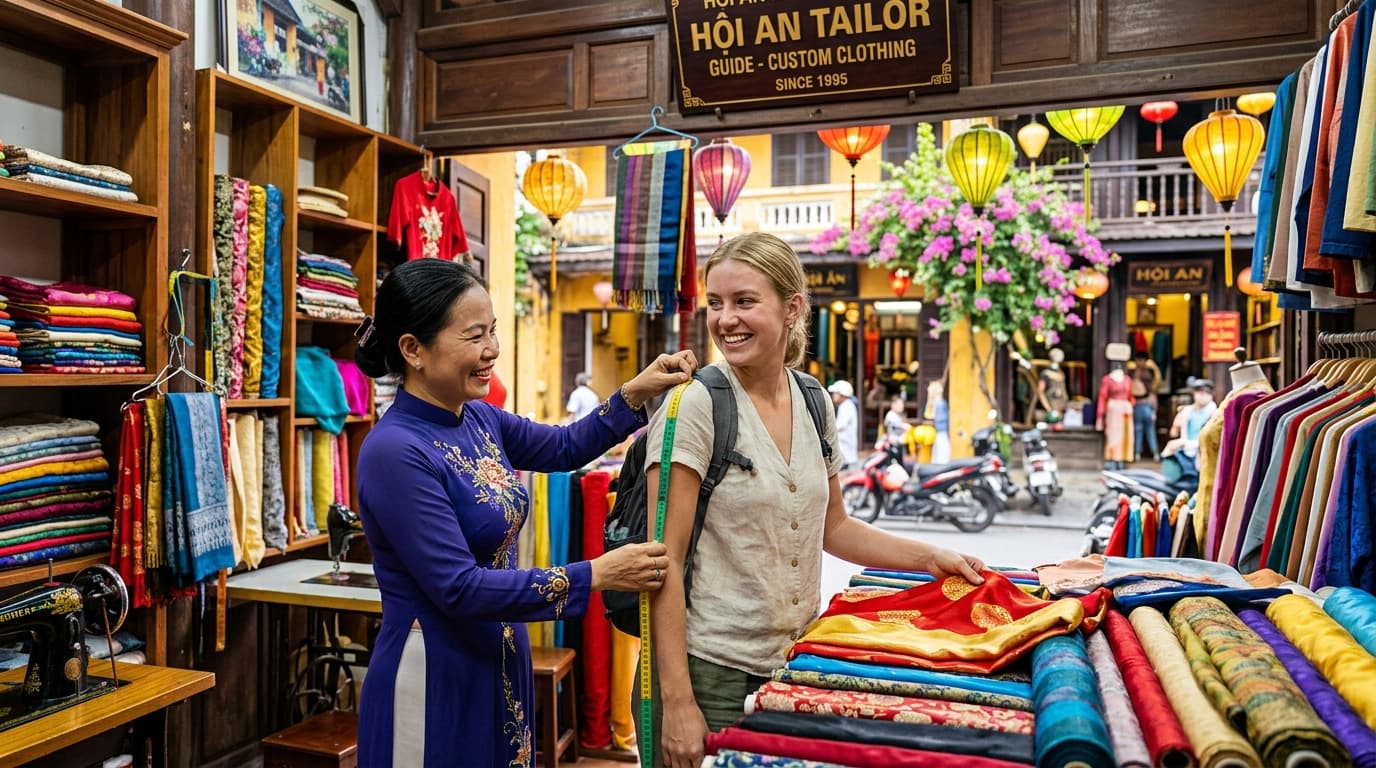
Getting Clothes Made in Hoi An: The Complete Tailor Guide
Everything you need to know about getting clothes made in Hoi An: best tailor shops, real prices, how to choose fabric, what to order, and how to avoid common mistakes.

Ninh Binh Guide: Tam Coc, Trang An & Mua Cave – Vietnam's Hidden Gem
Complete Ninh Binh travel guide: explore Tam Coc, Trang An, and Mua Cave. Includes itineraries, where to eat, stay, and insider tips.
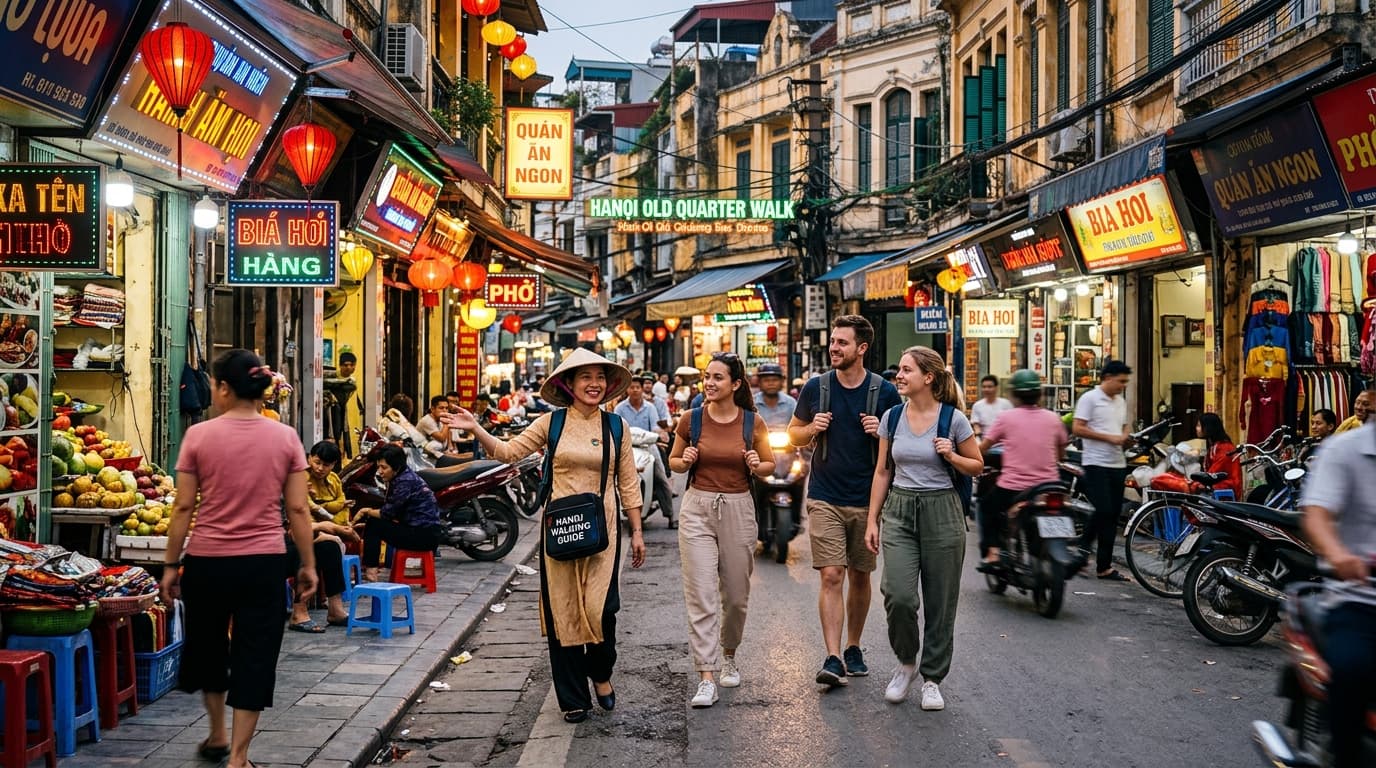
Hanoi Old Quarter Walking Guide: 36 Streets Explained
Explore Hanoi's Old Quarter with our complete walking guide to 36 historic streets, top sights, street food, and practical tips.

Da Lat: Vietnam's French Hill Station in the Central Highlands
Discover Da Lat, Vietnam's misty French hill station. Complete guide to neighborhoods, sights, food, stays, and practical tips.
Plan Your Vietnam Trip
Book hotels, transport, activities, and get connected with an eSIM
Some links are affiliate links. We may earn a commission at no extra cost to you.